In a nation that has spent more than two decades engaged in continuous conflict, the burden of war has fallen largely on a small fraction of Americans—the men and women who deploy, often repeatedly, on behalf of decisions made far from the battlefield. While civilian life moves forward, these service members shoulder the weight of policies, strategies and risks that most citizens rarely see or fully understand. The result is a widening gap between those who serve and those they serve to protect.
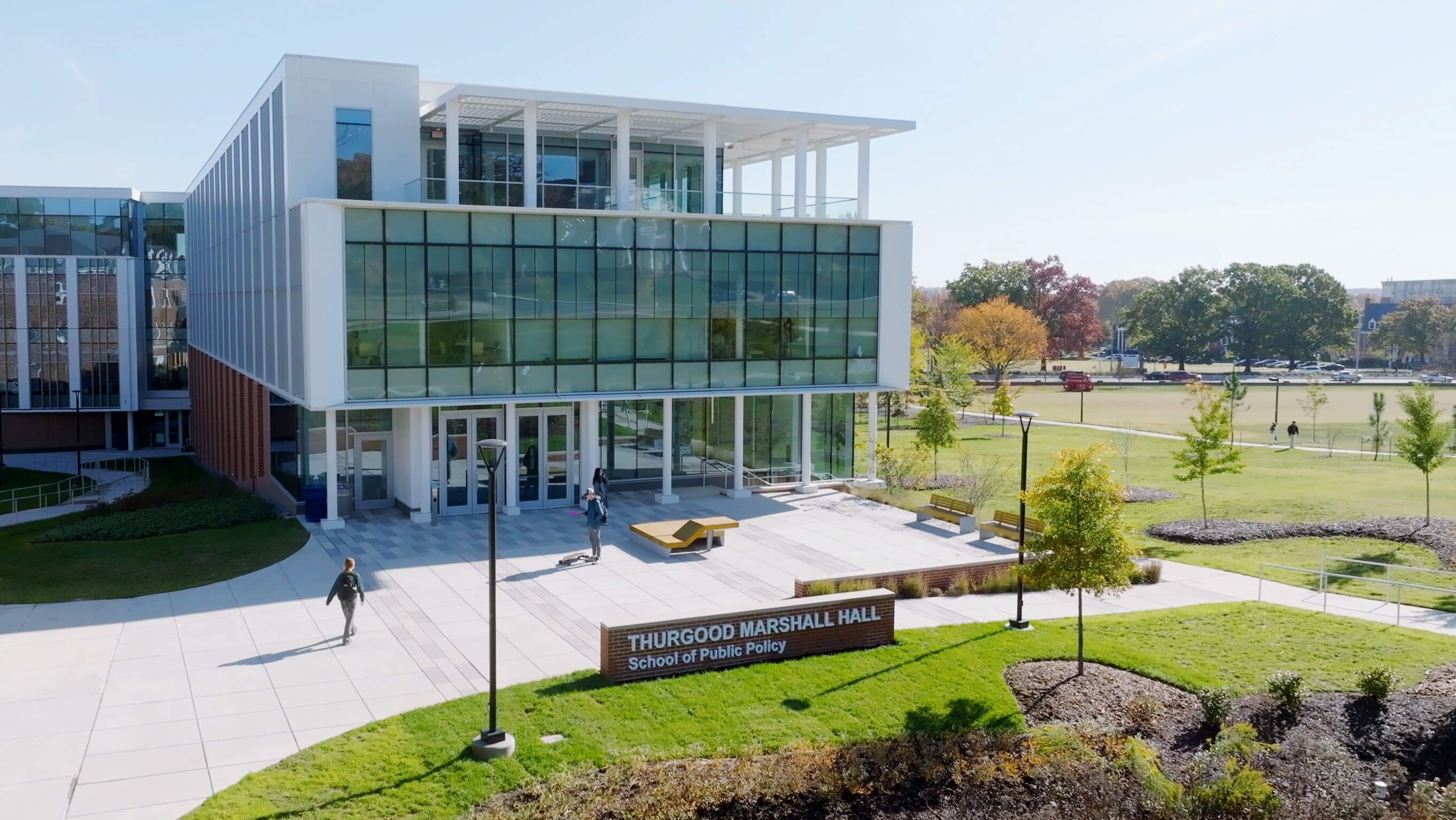
To help bridge that divide, the School of Public Policy hosts a “Military Perspectives” speaker series, inviting active duty servicemembers and veterans to engage directly with civilian audiences and share candid perspectives shaped by years of service. It has included officers and enlisted personnel from the Navy, Marines, Army, Air Force and Coast Guard. The series is designed to foster greater understanding of military service, civil-military relations and national security challenges, bringing a wide range of voices into conversation with students across disciplines.
In the final fall event of the series this year, Lieutenant General Douglas A. “D.A.” Sims II, USA (Ret.) visited for a dialogue with students, faculty and alumni. In addition to the public conversation, Sims also met with ROTC cadets, offering them a personal opportunity to engage with a senior military leader and discuss pathways to service and leadership. Sims, who concluded a distinguished Army career this year as director of the Joint Staff, shared an inside look at military culture, civil-military relations and the evolving demands placed on service members and their families.
Sims’ career began at West Point and spanned more than three decades, during which he served as an infantry officer and commanded at every level, from leading small units on the ground to overseeing the 1st Infantry Division at Fort Riley, with deployments to Iraq and Afghanistan. Over time, he became known for his belief that soldier wellness, resilience and family support are central to readiness and mission success.
He reflected on the widening gap between military and civilian communities since the transition to the all-volunteer force, and particularly after the security tightening that followed 9/11. “We disconnected the military in many ways from civilian society,” Sims explained, noting that prior to 2001, military installations were far more accessible to local communities. Reopening elements of bases, he argued, could help bridge that divide and foster better understanding of what service members do on behalf of the country.
One of the recurring themes of the conversation centered on military wellness and the cultural barriers that long discouraged service members from seeking help. “I am selfish,” he told students. “I think that our readiness improves when our people are closer to 100%.” He described instituting mandatory wellness checks for every soldier returning from deployment, structured not as clinical evaluations but as dedicated time with a counselor to talk about anything weighing on them. The result, he said, was deeper trust, stronger units and in his brigade’s case, an entire command tour without a single suicide. This conversation aligned with many of the themes that Lt. Col. Elisha P. Pippen, the Air Force director of psychological health, shared during her visit.
Sims emphasized that the heart of military service, whether in combat, at the Pentagon or in partnership with civilian agencies, lies in human connection. “If I was going to boil down what's really important in life to me,” he reflected, “it does all come down to people and relationships with people.” From building trust across federal agencies to strengthening bonds inside a tank crew, he highlighted that relationships are the foundation on which readiness, resilience and effective leadership are built. The armed forces’ ability to build strong teams in the context of an increasingly polarized society has been shared by many of our other visitors.
Sims’ visit is part of a broader “Military Perspectives” series that has featured speakers from across the armed forces.